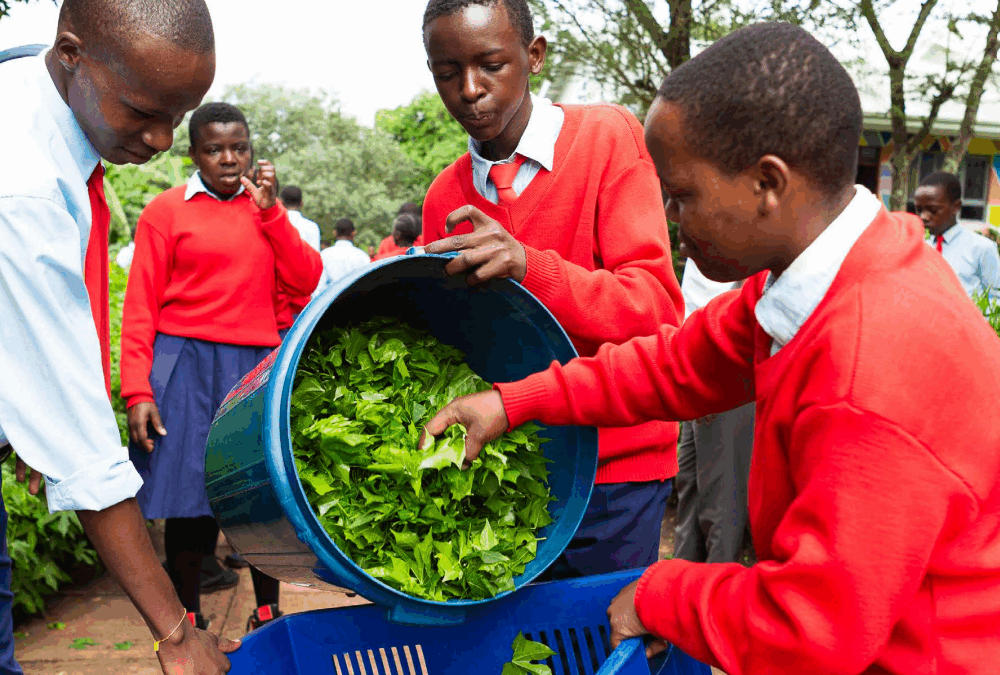
Since adopting permaculture, we have seen significant improvements in our ability to capture and retain surface runoff water, which has enriched the soil and improved overall productivity. Compared to when we first began, yields of vegetables and fruits have increased, with healthier plants and more reliable harvests throughout the year. This has reduced the risk of shortages during dry months and improved the diversity of food available for students.
Equally as important, these changes have enhanced student learning. For example, students are now able to see firsthand how composting, mulching, and water management techniques directly impact crop growth, which makes classroom lessons more practical and memorable. Many students have begun to replicate these practices at home. For instance, Ngisito, a 10th grade student, used that knowledge to plant cassava at home and was able to sell it to the school for breakfast. Leah, also a 10th grader, is growing vegetables with her mother in a small garden and selling them to make a profit. Reflecting on her experience, she explained, “Instead of buying vegetables, we can grow them ourselves. Sometimes we don’t have money, so having our own garden really helps.” She added, “Neighbors have started noticing too… It feels good to share the knowledge.” In Arkaria, where water is scarce, Nandoya began teaching her mother about sack gardening, and her family has already started using the technique.
Families report improved soil fertility and increased household food production, demonstrating the tangible impact of permaculture beyond the school grounds. While there is still room for growth, the progress thus far has been both noticeable and encouraging.
 Trainer & East Africa Regional Hub Coordinator
 A perpetual student and longtime traveler, Rachel found her way to EARN through a growing conviction that regenerative land work matters. She previously worked in the for-profit world, mostly in software development. After years working in technology, she found herself drawn toward work that connects people to the land and to each other. Rachel received her Permaculture Design Certificate in Ecuador and continues to be shaped by the principles she encountered there. She is excited to contribute to EARN’s mission through the operational work that keeps everything running smoothly.
 Founder at Global Thinkers Forum
 Senior Architectural Designer at KEM STUDIO
 Expert Engineer and Business Developer at DEME-Group
 Founder & CEO at Food Corridor
 Co-Founder & Certified Money Coach at AuraFinance
 President at Oppenheimer Development Properties
 Trainer
 Trainer
 Communications Manager
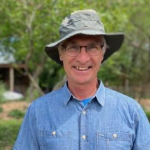 Trainer
 Trainer
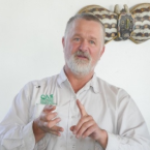 Lead Trainer
 EARN Administrative Coordinator
 CEO, President, & Co-Founder at EARN