
Welcome to the permaculture hub
Make a Donation
SIGN UP FOR OUR NEWSLETTER
Permaculture is a philosophy of working with, rather than against nature; of protracted and thoughtful observation rather than protracted and thoughtless labor; and of looking at plants and animals in all their functions, rather than treating any area as a single product system.
Overview
Permaculture (derived from the concept of “permanent agriculture”) is a type of sustainable or Regenerative Agriculture that seeks to replicate nature in a food producing farm.This form of agriculture includes integrating a variety of perennial trees and plants with more traditional crops to increase variety and quantity of produce, improve soil quality, help with water retention, extend harvest seasons, and combat deforestation by introducing large quantities of trees in areas that are typically slashed for more conventional methods of farming.
By transforming pieces of land into a rich, permaculture-based farm, people are better cared for (by having more and varied foods), the planet and general environment in an area become healthier (by reducing chemical usage and returning valuable nutrients and water to the soil), and farmers have enough excess to sell for a profit.


What is Permaculture?
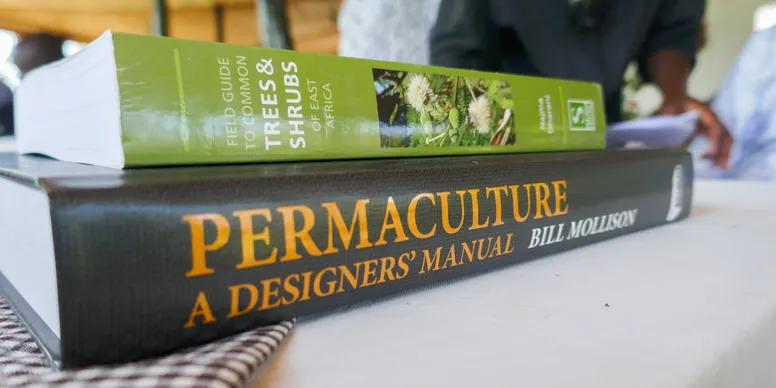
What is Permaculture?
Permaculture is a design system that aims to create sustainable and resilient human habitats by following nature’s patterns. It is based on a set of principles and ethics that guide the design of landscapes, buildings, communities, and other systems that support human and ecological well-being. Permaculture seeks to integrate rather than segregate, to cooperate rather than compete, and to regenerate rather than degrade the environment. Permaculture is not a fixed set of rules or techniques, but a creative and adaptive process that can be applied to any situation or scale.
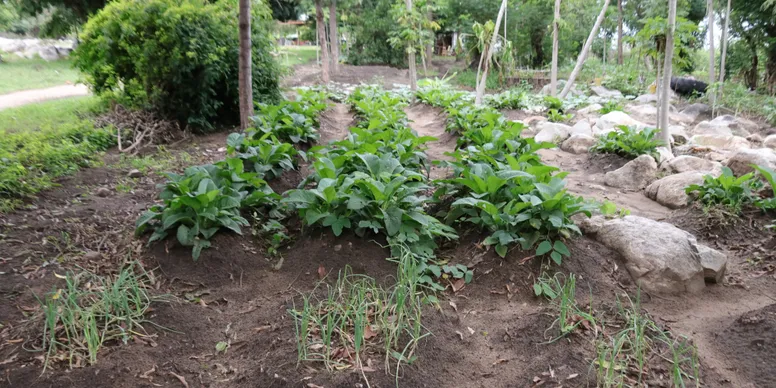
Industrial Agriculture vs. Permaculture
Industrial agriculture and permaculture are two different approaches to food production. Industrial agriculture relies on large-scale monocultures, synthetic fertilizers and pesticides, and mechanized harvesting and processing. Permaculture, on the other hand, is a design system that mimics natural ecosystems and promotes biodiversity, organic methods, and human-scale interventions.
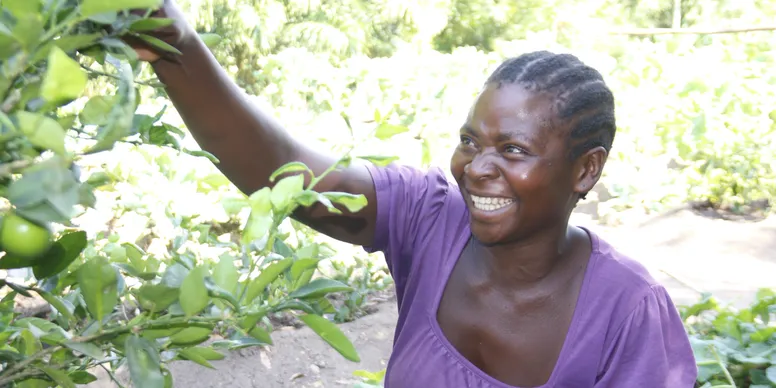
Why is Permaculture important?
We must begin to create sustainable and self-sufficient systems that meet human needs while respecting and enhancing the environment. Permaculture is based on a set of principles that guide the design process, such as observing and interacting with nature, using renewable resources, minimizing waste, and integrating rather than segregating elements. Permaculture can be applied to any scale, from a balcony garden to a farm or a city.
Resources
Explore EARN’s resource library for an introduction to EARN and its approach to Permaculture, regenerative agriculture, climate resilience, soil health, planting systems, nutrition, and water management.
These resources are intended for grantees, partners, educators, farmers, and community leaders looking to better understand EARN’s work and apply practical, sustainable growing practices.
 Trainer & East Africa Regional Hub Coordinator
 A perpetual student and longtime traveler, Rachel found her way to EARN through a growing conviction that regenerative land work matters. She previously worked in the for-profit world, mostly in software development. After years working in technology, she found herself drawn toward work that connects people to the land and to each other. Rachel received her Permaculture Design Certificate in Ecuador and continues to be shaped by the principles she encountered there. She is excited to contribute to EARN’s mission through the operational work that keeps everything running smoothly.
 Founder at Global Thinkers Forum
 Senior Architectural Designer at KEM STUDIO
 Expert Engineer and Business Developer at DEME-Group
 Founder & CEO at Food Corridor
 Co-Founder & Certified Money Coach at AuraFinance
 President at Oppenheimer Development Properties
 Trainer
 Trainer
 Communications Manager
 Trainer
 Trainer
 Lead Trainer
 EARN Administrative Coordinator
 CEO, President, & Co-Founder at EARN